



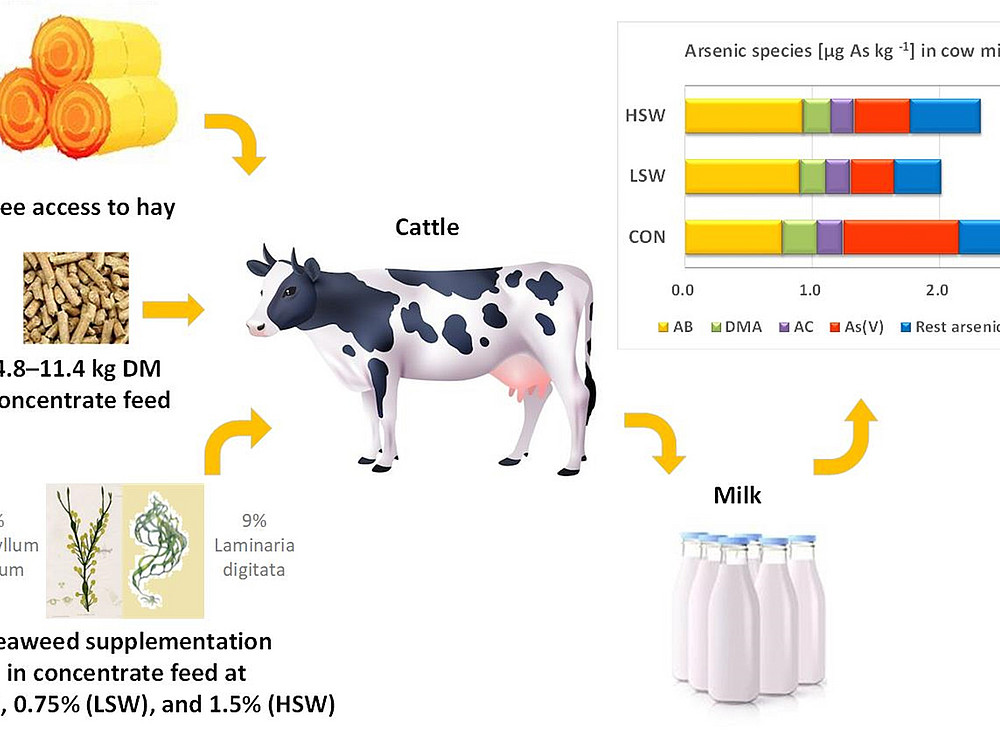
Algae has been used as animal feed supplement in coastal areas since ancient times. It is currently an underutilized resource that can have a positive effect on animals due to its valuable components. In the current study, we investigated whether the supplementation of algae has an impact on the arsenic profile of milk. The result shows that both As(V) and total arsenic decreased when algae were supplemented, indicating that there are no safety risks for milk and dairy products when feeding an algae mixture of 91% Ascophyllum nodosum and 9% Laminaria digitata at the levels used in the present study, taking into account the arsenic content.
Wednesday, 17 July 2024